


About the Author:
Ms. Asheka Tenzin, Academic Director of Ajeenkya D Y Patil International Schools, has 26 years of experience in teaching science at the secondary level. She holds a Bachelor’s Degree in Education and a Master’s Degree in Microbiology. For the past 17 years, she has been teaching in schools that offer all three IB programmes. She is an IB Programme Leader for MYP Schools and evaluates schools for MYP Programmes. She is also a School Visiting Team Member for the IB Asia Pacific region, an Online workshop Facilitator and the MYP Network Chair for the South Asia MYP Coordinator Network (South).
Ms. Tenzin is a certified trainer and has completed a Certificate Course in Train the Trainer by Tata Institute of Social Sciences and the Cambridge PDQ Programme Leader Induction Course.
Empowering Students Through ATL Skills – A Counsellor’s Perspective at DYPIS, Worli.
As an IB school counselor, one of the most rewarding aspects of my role is seeing our students evolve into independent, self-aware learners. While academic achievement is often highlighted, what truly sets the IB curriculum apart is its focus on how students learn — and this is where Approaches to Learning (ATL) skills come into play.
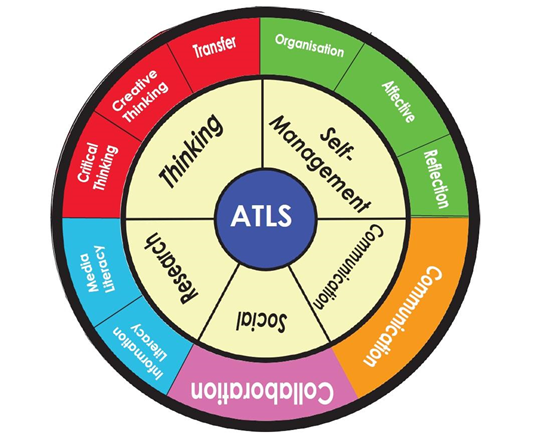
ATL skills are not just educational buzzwords. They are the foundation of a student’s personal and academic development. These five key skill areas — Thinking, Communication, Social, Self-Management, and Research — are woven into every aspect of the IB framework, from the Primary Years Programme (PYP) through to the Diploma Programme (DP). They enable students to build habits and attitudes that extend well beyond the classroom. In DYPIS, Worli emphasis is placed to ensure that all the students are well equipped with these essential Approaches To Learning skills of life.
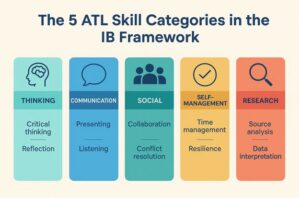
Take Thinking Skills, for instance. In our classrooms, we encourage students not just to answer questions but to ask them. We celebrate curiosity and give students the space to reflect, reason, and come up with their own solutions. As an IB educator, I have often seen how these critical thinking habits help students deal with academic pressure, interpersonal issues, and even personal decisions.
Communication Skills are another vital area. Whether students are working on group projects, writing extended essays, or resolving conflicts, we guide them in expressing themselves clearly and listening actively. In orientation sessions, often role-plays are used to help students rehearse difficult conversations or prepare for public speaking. These skills stay with them for life.
Perhaps one of the most undervalued but impactful ATL skill areas is Social Skills. In an increasingly diverse and global society, the ability to collaborate, understand others’ perspectives, and resolve conflict is crucial. Our students learn this through service (CAS) projects, team-based learning, and daily classroom interactions. From a pastoral perspective, these skills greatly enhance peer relationships and help prevent issues like bullying or exclusion.
Self-Management Skills often come up in one-on-one sessions. Students juggling academics, sports, and personal commitments frequently struggle with stress and time management. Through guided goal-setting exercises, mindfulness techniques, and reflection journals, we help them build resilience and take charge of their well-being — a life skill that’s more important than ever.
Finally, Research Skills empower students to become self-directed learners. While preparing for the Extended Essay in the DP, they learn to evaluate sources, analyze information, and construct well-founded arguments. These are the building blocks of academic integrity and informed citizenship. We at DYPIS, Worli believe in the holistic development of the student.
DYPIS Worli is unique in its approach to education. It offers IB at EYP and PYP levels followed by Cambridge education from Grade 6 to 10. Students after their Grade 10 have the option to choose from IBDP, IBCP and Cambridge AS & A Levels. This approach brings out holistic development with expertise in chosen focused subjects, thus widening the scope for students to seek higher education in India or Abroad.
To know more about IBCP: https://www.ibo.org/programmes/career-related-programme/
To know more about IBDP: https://www.ibo.org/programmes/diploma-programme/
To know more about Cambridge AS & A Levels: https://www.cambridgeinternational.org/programmes-and-qualifications/cambridge-advanced/cambridge-international-as-and-a-levels/
As an IB educator and the Academic Director I see the value of Approaches To Learning skills every day in DYPIS, Worli— in how students face challenges, support one another, and set goals for themselves. These skills do not appear overnight, but with continuous nurturing from teachers, parents, and mentors, they shape students who are not only academically successful but also emotionally intelligent, empathetic, and future-ready.
If we want to raise global citizens who are adaptable, thoughtful, and resilient, ATL skills are the toolkit — and I am proud that DYPIS, Worli IB students carry it with confidence.