

A student I spoke with who’d just finished her first year of A Levels described something that had bothered her since October, which was that she kept encountering things in her chemistry class that she felt she should already know, not new content but foundational ideas she was certain she’d covered in her IGCSE years and yet somehow couldn’t fully reconstruct when they came up again in a different context. She wasn’t struggling. Her results were fine. But there was this specific sensation, she said, of being slightly behind herself, of her IGCSE having prepared her for the IGCSE examinations more than it had prepared her for what came next.
She wasn’t blaming the school exactly. She just wished someone had told her earlier that there’s a version of the IGCSE built around genuine understanding and a version built around examination preparation, and that they look identical from outside the classroom.
What Cambridge’s Framework Is Actually Designed to Reward
Cambridge designs its IGCSE examinations externally and marks them externally, which means the school doesn’t set the questions and doesn’t mark the answers. The examinations are built to test whether a student can engage with the material they’ve studied in contexts that are slightly unfamiliar, which is a specific thing. A student who understands the underlying concept can do this. A student who’s been well-drilled in the specific question types that tend to appear can do this within a familiar range and finds it harder when the question shifts.
Schools that teach toward genuine understanding and schools that prepare students primarily through past papers and mark scheme practice can produce similar examination results. What they don’t produce similarly is what the student carries into the next stage of education. The gap between these two approaches is visible in the first term of A Levels or IB Diploma and it’s consistent enough that it has a pattern.
The Teacher-Student Ratio in Grades 9 and 10
Most parents ask about class sizes as a general school quality question. In Grades 9 and 10 specifically it’s a more pointed question than that. The IGCSE curriculum in mathematics, sciences and languages puts pressure on foundational concepts in ways that earlier years often didn’t. A student can get through Grades 6 and 7 with a shaky understanding of something and navigate around it without it becoming a problem, until the IGCSE content in Grade 9 makes it unavoidable. The teacher who’s managing twelve students has a different capacity to notice this developing quietly in September than the teacher managing twenty-eight. And the difference between catching a gap in September and catching it in March of Grade 10 is the difference between addressing it and managing around it for the examination.
Asking a school specifically what their class sizes are in Grades 9 and 10 is more specific and more useful than asking about class sizes generally.
The Boarding School in Maharashtra, What It Actually Is
IGCSE boarding schools in Maharashtra draw students from across the country and sometimes from outside it, not primarily because the IGCSE offering is different from what’s available in city day schools but because the residential experience itself is what the family is choosing.
When a student boards, the school becomes the complete daily environment. The social world is there, the study environment is there, the rhythm of the day is shaped by the institution rather than by home. For a student who’s ready for this, who’s developed enough independence and enough internal compass to live well in a shared environment without the scaffolding of home, it builds something that day schooling simply doesn’t build in the same way. The question worth asking honestly before choosing a boarding school isn’t whether the school is good but whether the child is ready for the experience, and those are different questions with different answers.
What boarding schools in Maharashtra offer students from Mumbai families is sometimes simply a different environment, quieter, more focused, more removed from the city’s pace, which some students genuinely need and some find suffocating. Knowing which of those describes the child is the decision.
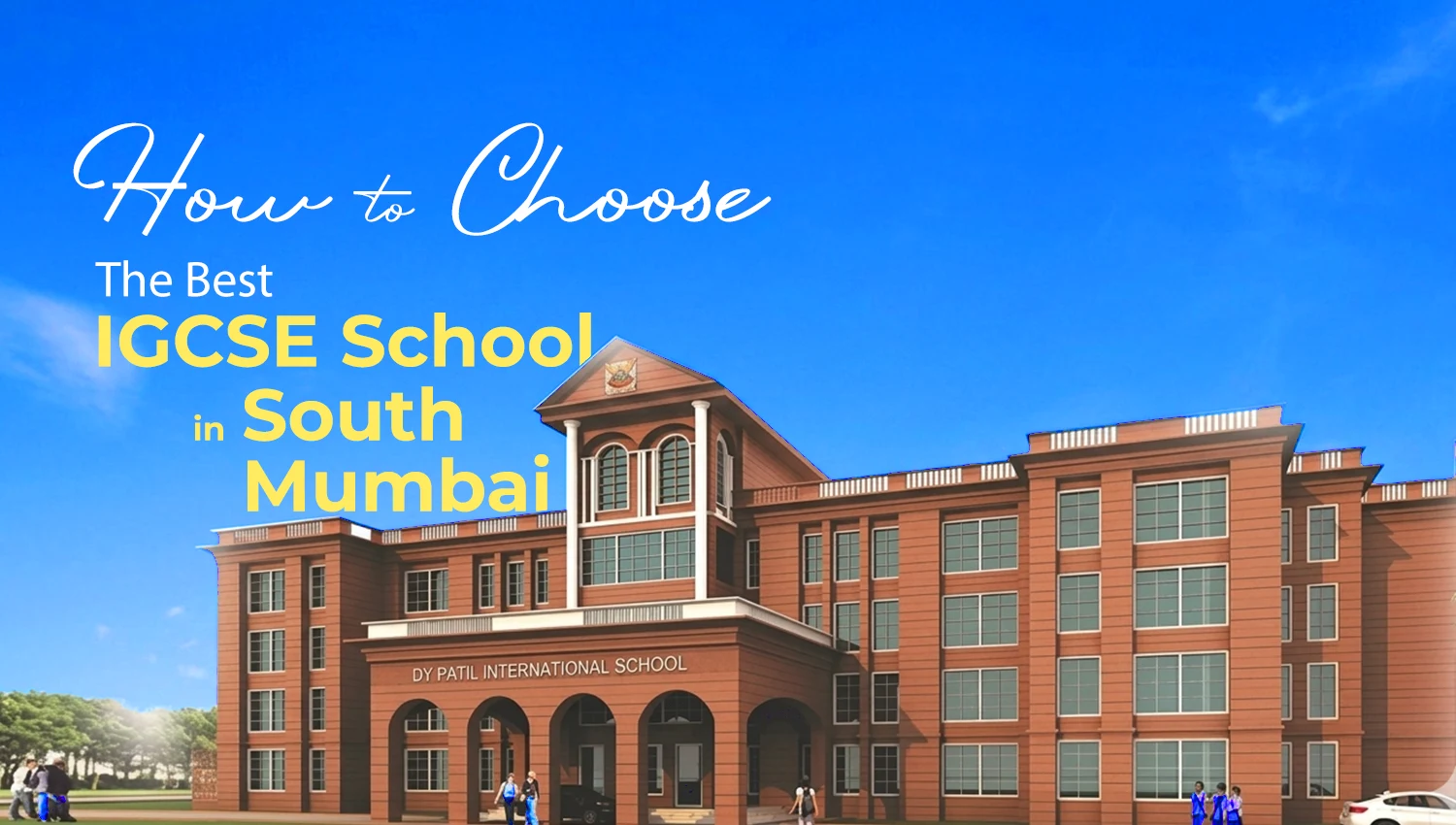
South Mumbai’s IGCSE schools give families another option entirely, the Cambridge qualification within the city’s professional and cultural environment, which has its own advantages for students who benefit from proximity to what the world around them actually looks like. DY Patil International School Worli offers Cambridge IGCSE in Grades 9 and 10 within a coherent pathway from Cambridge Secondary Level 1 in Grades 6 to 8, leading to a range of senior-school options in Grades 11 and 12, including the IB Diploma Programme, the International Baccalaureate Career-related Programme (IBCP), and A Levels. This gives students the flexibility to choose an academic or career-focused pathway that aligns with their interests and future goals. The school is also among South Mumbai’s top-ranked international schools in the Times School Survey.
FAQs
1. What subjects does the Cambridge IGCSE cover?
Ans. Mathematics, Sciences, Languages, Humanities, Commerce and the Arts across a broad subject menu. Students typically choose between six and nine subjects. The specific combinations available depend on the school and students generally choose with one eye on what they plan to study in Grades 11 and 12.
2. How is IGCSE assessment structured?
Ans. Most subjects combine external written examinations set and marked by Cambridge with internal coursework or practical components moderated externally. The balance between examination and coursework varies by subject, with sciences typically including more practical assessment.
3. What separates a strong IGCSE school from one that’s simply authorised to offer it?
Ans. The teaching approach is the main thing. A school teaching toward genuine understanding produces students who can engage with unfamiliar applications of what they’ve studied. A school focused primarily on examination preparation produces students who were ready for the specific examinations and sometimes less ready for what those examinations were designed to lead into.
4. Is a boarding school in Maharashtra better than a day school in South Mumbai for IGCSE?
Ans. Neither is better in any general sense. They’re different experiences suited to different students. Boarding builds independence and a specific kind of residential education. South Mumbai day schools offer the Cambridge qualification within a city environment that’s itself a resource. The right choice depends on the individual child.