

If you have been looking at different school options lately, you already know how overwhelming it can get. Each and every parent you speak to, has a different view. One says stick to CBSE. Another swear by ICSE. Someone else insists IB is the future. After a point, it honestly starts to sound like noise. Some say stick to CBSE. Some insist ICSE builds better language skills. And then someone mentions the IB curriculum in India, and the conversation changes slightly. Not dramatically. Just enough to make you pause.
The IB curriculum isn’t new globally, but in India, it still feels like something parents “explore” rather than default to. So what actually makes it different? And more importantly — is it really different in daily school life, or just on paper? Let’s unpack it in a simple way.
What the IB Curriculum in India Actually Feels Like
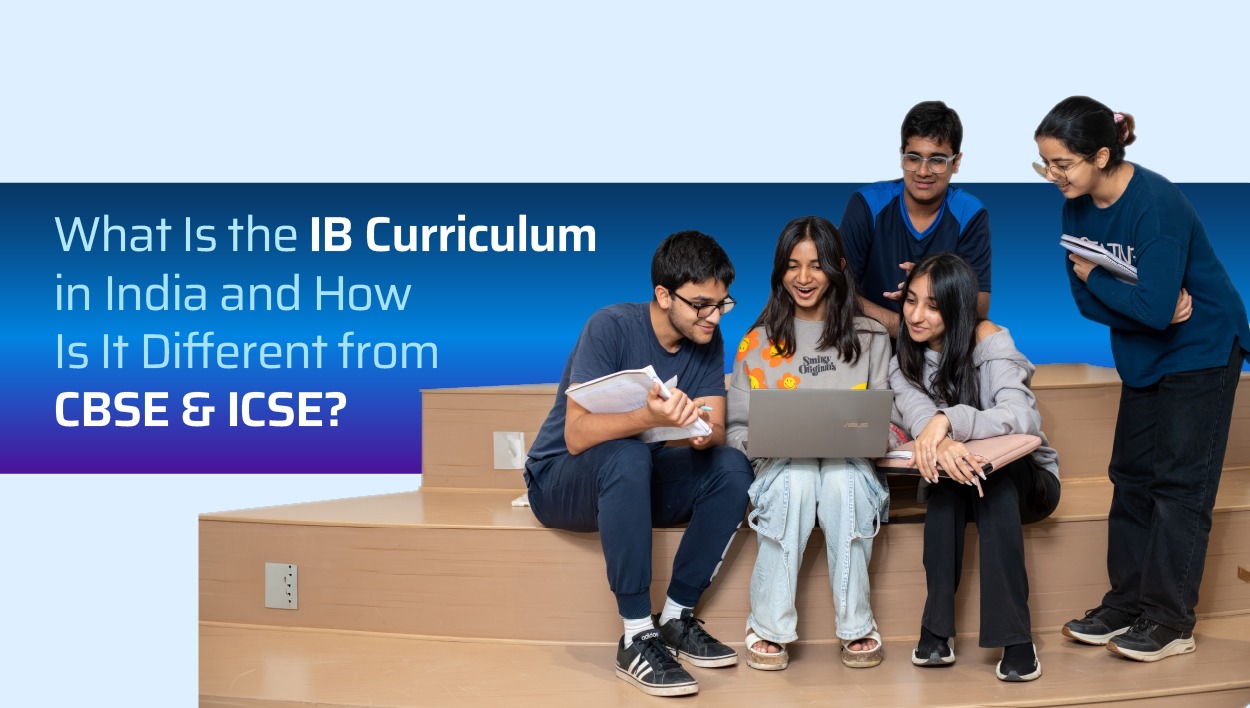
The IB curriculum in India is built around inquiry. That sounds academic, but in classrooms it simply means students are encouraged to ask why. Not just what.
For example, instead of finishing a chapter and moving to the next, teachers might build lessons around a larger theme. Climate change may not stay inside science. It might stretch into economics, politics, even literature. It’s less compartmentalised.
Exams exist, of course. But they’re not the only focus. Students work on research assignments, presentations, internal assessments. Some tasks stretch across weeks. That requires planning. Sometimes it overwhelms students at first. That part isn’t always discussed openly. Parents looking at the top IB schools often notice classrooms feel more conversational. Students speak more. There’s discussion. Occasionally debate. It’s not always neat and silent.
How IB Differs from CBSE and ICSE
Now compare that with CBSE or ICSE. CBSE is structured. Clear syllabus. Defined chapters. Strong alignment with competitive exams in India. Many families prefer it for exactly that reason. ICSE has depth. Language skills are emphasised. The content can feel detailed, sometimes dense.
The IB curriculum moves differently. Instead of one heavy board exam carrying most of the pressure, assessment is spread out. There are written exams, yes. But also essays, projects, coursework. Marks come from multiple directions. That can reduce last-minute exam pressure. But it also means students can’t ignore internal work and depend only on final revision.
Another difference? Flexibility. IB allows schools some breathing room in how they design units. CBSE and ICSE follow textbooks more strictly. None of this automatically makes one “better.” It just means the learning experience feels different.
Also Read – How to Choose the Right PYP School in Worli
Why Parents Explore the Best IB Schools in India
Interest in the best IB schools in India has grown steadily. Especially among families thinking about international universities later on. The IB Diploma Programme is recognised globally. That matters if overseas education is part of the plan.
But here’s something parents often realise after visiting campuses: IB demands independence. Students are expected to manage research. Meet deadlines. Think critically. Teachers guide, but they don’t spoon-feed. Some children thrive in that environment. Some need time to adjust.
When people refer to the top IB institutions, they’re usually talking about how consistently the philosophy is implemented — not just infrastructure or branding.
Is the IB Curriculum in India Right for Every Child?
Honestly? No system fits everyone. A student who prefers clearly defined study material and exam preparation strategies may feel more comfortable in CBSE. A child who enjoys writing, discussion and analytical tasks may lean naturally toward the IB curriculum in India.
It comes down to temperament. Parents sometimes get caught up in trends. But board selection works best when it reflects how the child actually learns — not what sounds impressive at a gathering. Visiting schools helps. Sitting in on orientations helps more. Watching how students interact tells you far more than brochures do.
Read More – How Does the IGCSE Curriculum Compare to the Indian State Board Curriculum?
Conclusion
At DYPIS Worli, learning doesn’t feel one-dimensional. Yes, the programmes follow an international framework, but there’s also a steady academic structure behind it. Students are encouraged to put up complex questions and think for their betterment, yet they are not left alone in figuring everything out. Teachers as guides are always there to help the students at every step of the way. Within no time, this mix of freedom and support helps them develop into confident individuals who can think and make their decisions easily for what they want to pursue in the years ahead.