

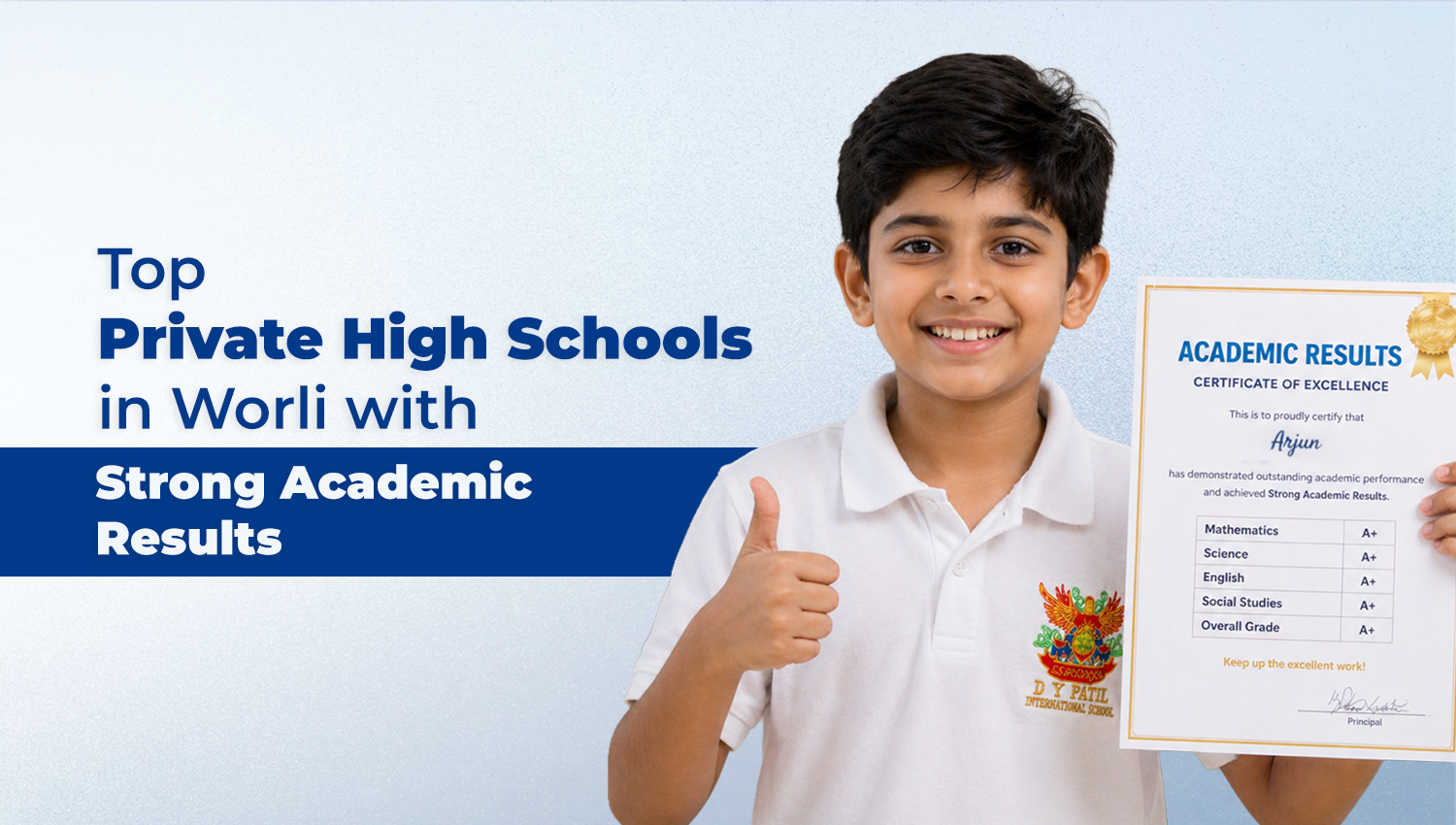
Results are where most school searches begin and it is a reasonable place to begin. A school that consistently produces students who perform well in their final examinations is doing something right in a basic sense and the impulse to start there is not wrong. Results matter for the student’s future, for the confidence that comes from knowing you can perform under real pressure, and for the practical doors that examination outcomes open in ways that general satisfaction with the school experience simply does not.
The problem is not with starting at results. The problem is with stopping there. Because results emerge from very different kinds of schools and very different kinds of processes and the result alone does not tell you which process produced it. A school whose students perform well because they have genuinely understood what they studied is a different institution from a school whose results come from two years of intensive examination coaching concentrated at the end of the secondary cycle.
Both might produce similar numbers in the final year. The students inside them have had genuinely different experiences and come out with genuinely different preparation for what follows school.
What Worli’s School Landscape Actually Offers
Worli sits in a part of South Mumbai where the school options are real rather than nominal. Families here are generally comparing genuinely decent institutions rather than choosing between a good option and the only available one. This is a fortunate position to be in and it still requires actual investigation rather than defaulting to whichever name appears most often in the building group chat.
Private high schools in Worli vary in meaningful ways. The curriculum each follows has direct consequences for what comes after school. The competitive culture each sustains shapes what the daily experience of being a student actually feels like. The pastoral care available to students navigating the specific pressures of high school is not the same across institutions and the difference matters to some children more than others. These are the variables that determine the experience and not only the result.
Also Read – Best Cambridge Schools Near Me with Good Extracurricular Activities
Personal Potential and What a School Actually Enables
There is a version of academic performance that comes from pressure and a version that comes from being genuinely enabled. These look similar from outside and feel very different from inside. A student who achieves strong results because the school created the conditions for them to develop into a capable and confident learner has experienced something different from a student who achieved similar results because the school drilled them effectively toward examination performance. The first student arrives at university or at a career knowing something about their own capacity. The second arrives knowing how to perform under a specific kind of pressure.
The schools that enable personal potential rather than only producing examination outcomes are the ones that hold academic rigour and holistic development as genuinely equal priorities rather than trading one against the other. This balance is not a compromise between being academically serious and being a rounded person. It is the recognition that genuine academic development and personal development feed each other. A student who has been allowed to develop their own interests, who has experienced leadership, who has pushed themselves in sport or arts or community service, tends to perform better academically too not despite those experiences but partly because of them.
Top schools in Worli that understand this produce students who arrive at the next stage of their lives with more than their results. They arrive with a sense of what they are capable of that was built across twelve years rather than concentrated into the final two.
The Curriculum Question at High School Level
High school is where the curriculum decision produces its most direct and immediate consequences. A student completing their senior secondary years under the IB Diploma Programme holds a qualification that universities across the United Kingdom, the United States, Australia, Canada and most of Europe actively understand and look for. A student completing Cambridge A-levels is in a comparable position. A student completing a state board programme holds a qualification that is well understood domestically and requires more explanation in international admission processes.
For families in Worli whose aspirations for their children include universities outside India this is a practical distinction. The IB Diploma is worth understanding before it gets reduced to a prestige label. It is a genuinely demanding programme. Students study across six subject groups simultaneously, write a 4000-word extended essay, engage with theory of knowledge as a standalone subject, and complete creativity, activity and service requirements alongside their examinations. A student who finishes this is accustomed to a level of sustained intellectual demand that is visible to the universities that subsequently receive them.
Read More – How Does the IGCSE Curriculum Compare to the Indian State Board Curriculum?
What Strong Results Actually Come From
The best schools in South Mumbai that produce consistent strong results are doing several things simultaneously that take years to build and that do not appear in the results themselves. Faculty who understand their subjects deeply and teach them engagingly. A culture where intellectual challenge is the normal expectation. Enough individual attention that a student who is struggling gets identified and supported before the gap becomes a performance problem. Assessment practices designed to build understanding progressively rather than only to measure it at the end.
During a school visit these things are assessable if you look at the right things. How teachers talk about what they teach when no one is evaluating them. Whether students in classrooms look like they are thinking or transcribing. Whether the feedback students receive is specific and developmental or purely evaluative. Whether students who are not at the top of the cohort are visible in the support infrastructure or only in the aggregate data.
DYPIS in Worli offers the IB Diploma Programme and Cambridge A-levels within a school whose learning philosophy runs consistently from the early years upward. The results from that programme are built on curriculum continuity and genuine teaching quality accumulated across a student’s time at the school alongside a co-curricular programme and pastoral environment that takes holistic development seriously enough that it shows up in who students become and not only in what they score. For families in Worli looking for private high schools where the results and the education behind them are both worth having, DYPIS Worli, has the programme details worth spending real time on.
FAQs
1. What makes a private high school in Worli genuinely strong academically?
Ans. Teaching quality that builds understanding rather than drilling examination technique. A culture where academic challenge is the norm. Support systems that identify struggling students before the gap becomes a performance problem. Assessment practices that develop understanding progressively. These things produce results that are built on genuine education rather than concentrated coaching.
2. How do the best schools in South Mumbai balance academic rigour and holistic development?
Ans. By treating them as complementary rather than competing. Students who have developed their interests, experienced leadership, and pushed themselves beyond the classroom tend to perform better academically too. The schools that have got this balance right produce students who arrive at the next stage of life knowing what they are capable of, not only what they scored.
3. How should parents look beyond results when evaluating top schools in Worli?
Ans. By visiting on ordinary days and watching what happens in classrooms when nothing is being performed for an audience. Whether teachers are engaging or delivering. Whether students seem to be thinking or transcribing. Whether the co-curricular programme is a real part of the week. Whether the school enables students to become more than their results.
4. What does the IB Diploma Programme involve at senior secondary level?
Ans. Six subject groups studied simultaneously, a 4000-word extended essay, theory of knowledge as a standalone subject, and creativity, activity and service requirements alongside the examinations. It is a genuinely demanding programme that produces students accustomed to sustained intellectual challenge and to working across disciplinary and personal boundaries in ways that are visible to the universities that receive them.
5. What is the difference between a school that produces results and one that enables personal potential?
Ans. A school that produces results has usually optimised for examination performance. A school that enables personal potential has created conditions for genuine development across academic, personal and co-curricular dimensions simultaneously. The results from the second kind of school are built on something more durable and the students who come out of it tend to demonstrate that difference in what they do after school rather than only in what they scored during it.