

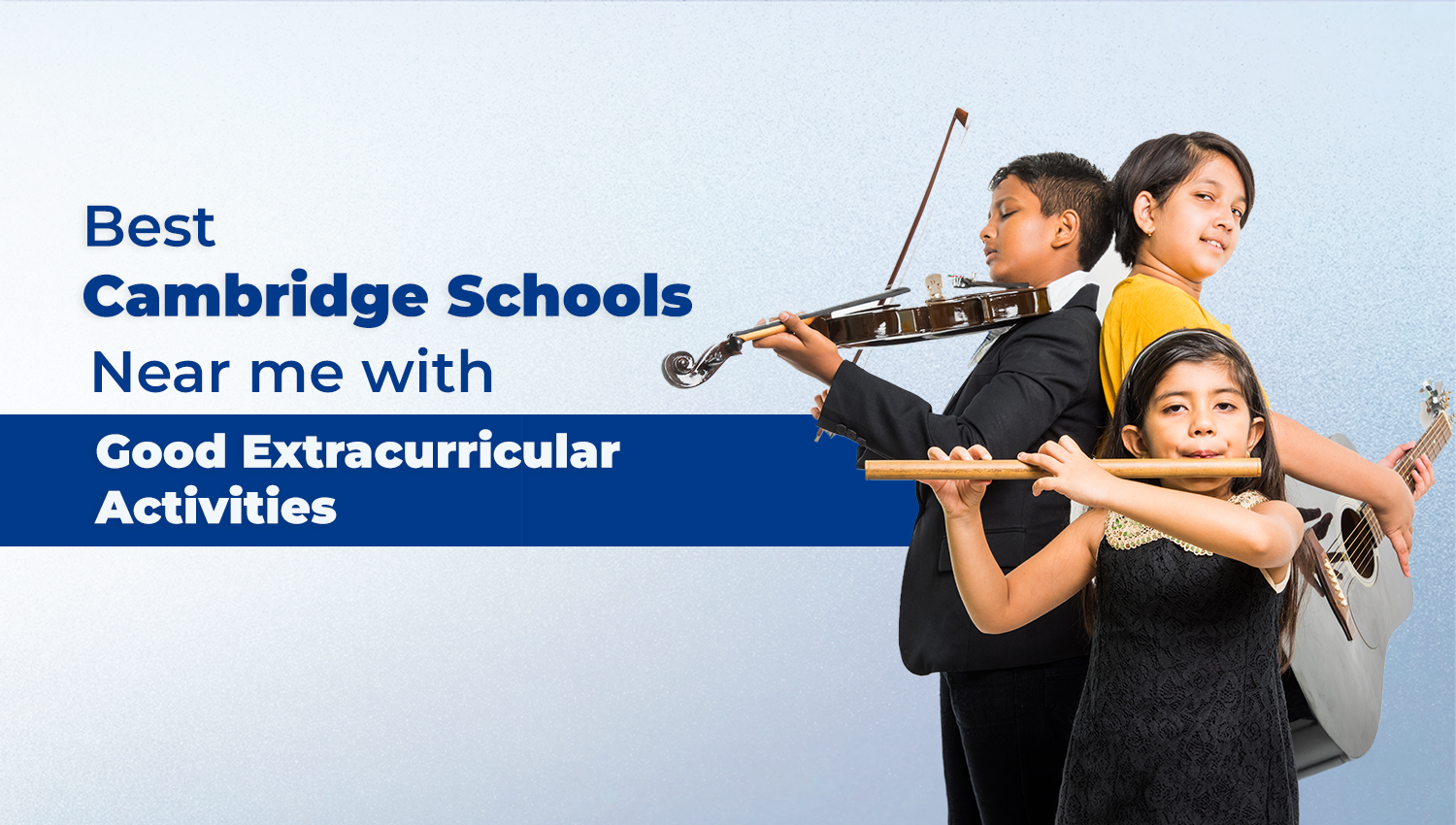
The extracurricular question arrives late in most school searches and in a slightly different tone from the serious questions. You have already asked about results, about the curriculum, about university placement rates. And then almost as an afterthought you ask what the sports and activities are like. This tone is understandable and it is slightly wrong.
Twelve years is a long time to spend inside an institution. What a child becomes across those twelve years is not only determined by what happens in classrooms. The child who spent those years in a school that took music and sport and debate and community service seriously alongside academics develops differently from the child who spent them somewhere that treated everything outside the syllabus as supplementary to the real work.
The difference is not in what subjects they studied but in the kind of person the experience produced. Whether they can lead something. Whether they can fail at something and recover. Whether they have interests that are genuinely theirs rather than assembled for a university application.
What Good Co-Curricular Actually Looks Like
A school that has a long list of clubs in its prospectus is not automatically a school where those clubs are alive, well-attended, and genuinely meaningful to students. The list is the easy part. The culture that sustains it across ordinary weeks and not just event weeks is the harder part and the more important thing to look for.
The questions worth asking specifically during a visit are about frequency and participation rather than existence. How often does a student actually engage with music or sport or drama in a normal school week rather than in the weeks around an annual showcase. What percentage of students participate in at least one activity seriously rather than nominally. Whether students who are not heading toward academic distinction have visible paths to recognition through the co-curricular programme. These questions get at whether the activities are genuinely part of what the school is or decoration around the edges of it.
Also Read – How to Choose the Right PYP School in Worli
Cambridge and Why It Connects to This
The Cambridge curriculum’s emphasis on inquiry, analysis and independent thinking has a natural relationship with co-curricular engagement that more content-heavy Indian board curricula do not always share. Students trained to investigate and construct arguments rather than only to recall tend to bring a different quality to activities outside the classroom. The debate team that includes students practised in analytical thinking is doing something different from the one whose members are primarily good at remembering facts. The science fair entry from a school where investigation is a daily skill looks different from one assembled primarily for the occasion.
This connection between how a curriculum teaches and how students engage outside it is one of the things that makes the best Cambridge schools in India genuinely distinct. The learning approach spills over into everything rather than staying contained within formally academic hours.
Sports and What the DYPIS Programme Has Produced
Sport at the level that actually develops something in a child is not the annual sports day and the inter-house competition. It is regular coaching in specific disciplines. The experience of training with a team across a season and then competing against other schools. The particular combination of effort, setback and progress that sport creates when it is taken seriously rather than fitted in around the important things.
DYPIS Worli has produced students who have competed at national level in sport. A basketball player from the school has competed nationally and a sprinter has represented at that level too, which is the kind of outcome that does not come from a sports programme that is incidental to the school’s identity. It comes from a school where the sports programme is treated as a genuine development pathway rather than an afternoon activity.
When parents searching for Cambridge board schools near Worli ask about sports, this is the level of specificity the question deserves. Not whether the school has facilities but whether the programme develops athletes who carry something from it.
Read More – Top Benefits of STEAM Education for Children in Worli
The Arts as a Real Part of the School
In schools where the arts are treated as supplementary they are the first thing to lose time when the academic calendar tightens. In schools where they are treated as core they are scheduled consistently, resourced properly, and taken seriously enough that students who are genuinely talented in these areas have somewhere real to develop rather than somewhere nominal to place their abilities.
The IB learner profile, which underpins the learning philosophy at DYPIS alongside the Cambridge curriculum, includes the arts as part of what a well-developed student looks like. At DYPIS in Worli the co-curricular programme is built within a framework where creative and physical development are part of the whole rather than optional additions. The clubs, the sports, the arts, these are part of what the school is. For families in South Mumbai looking for best Cambridge schools where the extracurricular is genuinely alive rather than catalogued, DYPIS Worli, is where the full picture of school life is visible.
FAQs
1. What makes extracurricular activities genuinely good at the best Cambridge schools?
Ans. Frequency and participation rather than just existence. Activities scheduled consistently through ordinary school weeks. High genuine participation rates. Students who are not academically distinguished have visible paths to recognition through sport or arts. These things together indicate a programme that is part of the school’s identity rather than supplementary to it.
2. How does the Cambridge curriculum support extracurricular engagement?
Ans. The inquiry-based and analytical approach tends to produce students who engage more actively with activities outside the classroom because the curriculum trains them to think and investigate rather than only to recall. This spills into how they approach sport, debate, arts and community service in ways that are visible in the quality of those programmes.
3. What should parents ask about sports at the best Cambridge schools in India?
Ans. Whether the sports programme includes regular coaching, structured competition against other schools, and seasonal training for specific disciplines. Whether the programme has produced students who have competed at state or national level. A programme that develops athletes at national level as DYPIS has done in basketball and athletics involves scheduling commitment and coaching quality that goes well beyond facilities and annual sports days.
4. Are the arts taken seriously at Cambridge board schools near Worli?
Ans. At the schools that means it yes. The indicator is whether arts subjects are scheduled consistently through the academic year or concentrated around performance events. Schools where music, visual art and drama are treated as consistent parts of the curriculum rather than event-based activities tend to develop genuinely talented students in these areas.
5. How do I evaluate whether a Cambridge school’s extracurricular programme is genuinely good?
Ans. Visit on an ordinary school day rather than an event day. Ask what percentage of students participate in at least one activity seriously. Ask whether activities get cancelled when academic pressure increases. Ask about specific outcomes the sports and arts programmes have produced. These questions reveal whether the co-curricular is real or listed.